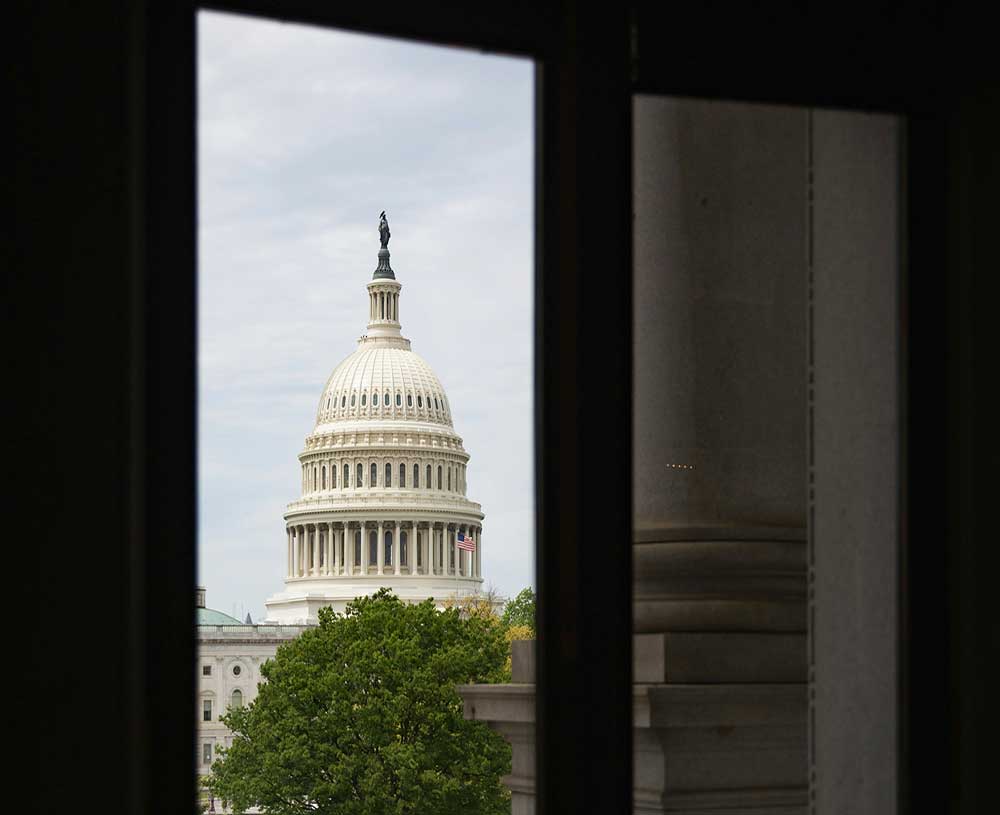
Navigating the complexities of the International Trade Commission (ITC) requires not only a strong understanding of Section 337 investigations but also insight into the procedural and strategic preferences that shape proceedings before the Commission. To better understand evolving trends at the venue and hear directly from those involved in ITC litigation, DOAR proudly sponsored and attended the American Conference Institute’s annual ITC Litigation and Enforcement Conference in Washington, D.C. The conference featured a series of judicial panels and practitioner discussions addressing key developments in ITC procedure, discovery management, trial strategy, claim construction, and emerging issues impacting investigations before the Commission.
Among the highlights of the conference was a panel featuring ALJs Doris Johnson Hines and MaryJoan McNamara, who shared perspectives on discovery disputes, issue narrowing, claim construction, trial presentations, and post-hearing practice. While the judges acknowledged that every investigation develops differently, both emphasized the importance of efficiency, clear organization, and focused advocacy throughout the life of an investigation. Below are several key takeaways from the discussion and what they may mean for ITC practitioners moving forward.
Discovery Disputes and Early Issue Narrowing
Both Judge McNamara and Judge Johnson Hines emphasized that discovery disputes should be raised promptly rather than allowed to linger unnecessarily. Judge Johnson Hines encouraged parties to seek guidance earlier when they reach a genuine impasse and noted that narrowly tailored letters are often appropriate when requesting ALJ involvement.
Importantly, she stressed that parties should clearly identify:
- the relief they seek,
- the action they want the opposing party to take, and
- the timing involved.
Judge McNamara similarly highlighted the importance of early resolution under Ground Rule 2.5 and explained that she frequently uses management conferences to determine precisely where disagreements remain before requiring full motion practice.
The judges also discussed differing approaches to narrowing issues before trial. Judge McNamara strongly favors narrowing claims and prior art references earlier in the case, particularly in investigations involving multiple patents. For a five- to six-day hearing, she noted that three to four patents and prior art references are generally manageable.
Her comments reflected concern that late-stage narrowing can unfairly burden respondents, who often must prepare for a significantly broader case than what is ultimately presented at trial. Judge Johnson Hines, by contrast, appeared somewhat more flexible and less inclined to impose rigid narrowing requirements early in the investigation, preferring to allow cases to develop more naturally.
Trial Presentation: Substance Over Demonstratives
Both judges stressed the importance of clearly connecting evidence to the ultimate argument. Judge Johnson Hines noted that expert declarations alone are not persuasive unless the expert can effectively explain why the evidence matters and how it supports the party’s position. She also discouraged counsel from reading lengthy citations directly from slides and suggested that parties may benefit more from investing resources in witness preparation than increasingly elaborate demonstratives.
Judge McNamara echoed many of these concerns, particularly in the context of invalidity presentations. She observed that invalidity arguments are often less clear and organized than infringement presentations and encouraged counsel to provide tighter prior art analyses and clearer explanations of how references map onto specific claim limitations.
Claim Construction and Technical Tutorials
The panel also provided insight into how different ALJs approach claim construction and Markman proceedings. Judge McNamara indicated that she generally prefers earlier Markman hearings when the technology is complex or when the parties request a hearing. She aims to issue claim construction rulings before trial where possible and limits the number of disputed terms to allow for more focused argument and rebuttal.
Judge Johnson Hines typically schedules Markman hearings later in the process but explained that she values them as opportunities to better understand the key issues and observe counsel’s presentation style firsthand. She also expressed concern about lengthy and conflicting expert declarations submitted before depositions occur, noting that some issues are better developed later in the investigation.
Technical tutorials received particularly strong support from Judge Johnson Hines, who described them as extremely helpful for understanding both the underlying technology and the prior art at issue. Tutorials are often scheduled shortly before trial and may include technology overviews or detailed walkthroughs of prior art references.
Trial Time and Post-Hearing Briefing
The judges also emphasized the importance of managing trial time efficiently and communicating scheduling concerns early. Judge McNamara explained that she has become less willing to extend hearing time absent advance notice, although she acknowledged that additional time may occasionally be appropriate for particularly complex issues such as FRAND or public interest-related disputes.
Judge Johnson Hines similarly emphasized that parties are expected to manage their allotted time responsibly and noted that five-day hearings remain the general standard in many investigations. Both judges indicated that requests for additional time are far more likely to be considered if raised early in the investigation lifecycle rather than during the trial itself.
On post-hearing briefing, Judge McNamara highlighted the value of concise writing, strong organization, and executive-summary-style introductions that clearly frame the key issues and evidence. Judge Johnson Hines observed that post-hearing briefs often become little more than revised versions of pre-hearing briefs and expert reports, and she encouraged counsel to rethink organization and streamline recurring arguments wherever possible.
AI, Summary Determination, and Broader Trends
The panel also briefly addressed emerging issues involving AI-generated filings and contentions. Neither judge indicated that they had clearly encountered AI-generated submissions yet, though both acknowledged that ITC guidance on AI use may be forthcoming. Judge Johnson Hines noted that if parties believe AI is contributing to excessive or abusive contentions, those concerns should be raised early so proportionality and timing issues can be addressed appropriately.
The judges also discussed the practical difficulty of winning summary determination motions at the ITC due to the Commission’s compressed procedural schedule. Judge Johnson Hines explained that the ITC’s 60-day deadline often limits the feasibility of granting such motions near trial, while Judge McNamara noted that she has granted very few outside the economic prong context.
Key Takeaways
The discussions at ACI’s ITC conference reinforced several practical lessons for ITC practitioners:
- raise disputes early and specifically,
- narrow issues thoughtfully,
- ensure persuasive expert testimony and demonstratives work together to clearly and effectively communicate complex issues to the court, and
- focus on clarity and organization throughout the investigation.
Taken together, the panel discussions underscored how effective ITC advocacy increasingly depends on streamlined case management, focused presentations, and a strong understanding of individual ALJ preferences.
Those themes also align with broader trends highlighted in DOAR’s recent ITC report on litigation strategy and Commission practice. Explore the report for additional insight into the evolving Section 337 landscape, and be sure to read DOAR’s recently released report on ALJ Bhattacharyya’s activity at the ITC. Stay tuned for the next installment in our ALJ series, which will examine recent trends and activity before Chief Administrative Law Judge Cheney.