
Introduction
For years, technology companies have relied on patent protection to safeguard their innovations and investments. Using trade secret protections has taken a back seat. However, in the last decade this has started to change. First, the Defend Trade Secret Act of 2016 opened up Federal Courts to litigants, allowing companies to seek injunctive relief, compensatory, and exemplary damages as well as attorney fees. Second, the Federal Trade Commission sought to ban non-compete agreements. Although a Northern District of Texas judge placed an injunction on the ban, many states already restrict the enforcement of non-competes, with four banning them outright. Third, more professionals are working from home than ever before. While this may boost productivity, it increases the risk that companies can lose control of confidential and proprietary information. Fourth, trade secret cases have begun to produce dramatic jury awards. For example, within the last five years, a Manhattan jury awarded TriZetto Group $284 million in compensatory damages plus $570 million in punitive damages, an Illinois jury awarded Motorola Solutions LLC roughly $764 million, and a Virginia jury awarded Appian Corp approximately $2 billion in damages.
As a result of these developments, trade secret litigation has received increased attention. Since 2020, the DOAR Research Center has been investigating public opinion about intellectual property issues facing general counsel and litigators alike in venues across the country. Although much of this research focuses on patents and infringement, the current study examines public attitudes toward conduct often tied to the theft of trade secrets by employees, namely, employees retaining a former employer’s trade secrets and/or giving them to new employers.
Specifically, we focus on conduct related to the high-tech industry and the theft of technology. The goal of the study is not simply to better understand public attitudes on the subject but to identify who is more likely to approve or disapprove of this conduct. Results provide guidance for general counsel in managing this conduct at the source and litigators faced with selecting a favorable jury when they take a trade secret case to trial.
The Survey
In September of 2024, the DOAR Research Center conducted an online survey of 1631 respondents who were over 18 and residing in the top IP venues in the country: the Marshall Division of the Eastern District of Texas (n=107), the Waco Division of the Western District of Texas (n=517), the Central District of California (n=505) and the District of Delaware (n=502). The sample was largely representative of the venues with respect to age, gender, race/ethnicity and education.[1]
We asked respondents about two types of conduct often associated with trade secret theft: a) an employee taking an employer’s confidential or proprietary materials and information and b) an employee giving that information to a new employer. The information at issue included information on how technology is developed and how a company solves critical technical problems. The first set of questions focused on employees retaining this information after their employment ends. We asked respondents:
- How acceptable or unacceptable is it for an employee who is leaving a job to take technical plans for technology that an employer developed?
- How acceptable or unacceptable is it for an employee who is leaving a job to take technical plans for technology that she/he helped develop?
The key distinction between these questions is the role the employee played in the development of the technology. The second set of questions focused on giving technical information, either in the form of a document or verbally, to a new employer. Specifically, we ask:
- How acceptable or unacceptable is it for an employee to give their current employer a document containing technical plans for a piece of technology that their prior employer developed?
- How acceptable or unacceptable is it for an employee to share with a current employer how a prior employer developed a piece of technology if the employee relies solely on their memory and knowledge rather than an actual document?
- How acceptable or unacceptable is it for an employee to share details about how a prior employer solved a critical technical problem when developing a product?
Answer options to each of these questions ranged from completely acceptable, somewhat acceptable and slightly acceptable to slightly unacceptable, somewhat unacceptable and completely unacceptable.
Key Findings
Results show that almost three-quarters (74%) believed it is unacceptable for an employee leaving a job to take technical plans for technology their employer developed. A majority (56%) believed it completely unacceptable. However, if the employee helped to develop the technology, the tables turned. Almost 59% believe it is acceptable for employees who helped develop the technology to take the plans with them when they leave their job. Notably, of those who found it acceptable, only 15% believed it was completely acceptable. The remaining 44% qualified their opinion at least somewhat. It is important to note we did not introduce the subject of contractual restrictions employees may face about the retention or ownership of work product. But it is noteworthy that most respondents believe, independent of contractual restrictions, employees have at least some ownership over their own work product.
When it comes to sharing a former employer’s confidential or proprietary information with a new employer, responses show a similar pattern. Almost three-quarters (72%) believe it is unacceptable for an employee to give their current employer a document containing technical plans for a piece of technology that their prior employer developed. In fact, almost half believed it is completely unacceptable. While respondents were especially critical of an employee passing documents, passing information while relying on one’s memory became less clear cut. Almost half (46%) believed it is acceptable for employees to share technical plans as long as they rely on their memory and not a document. Only one quarter of respondents believed it was completely unacceptable to pass confidential or proprietary information in this way. When it came to an employee sharing details with a current employer about how a former employer solved critical technical problems, almost two-thirds (62%) found it to be acceptable, although only 17% found it completely acceptable.
These findings suggest two opaque yet identifiable boundaries in attitudes about employees retaining and/or passing confidential or proprietary information. The first involves employees who create work product. Respondents condemn employees who take technical plans when the employer developed it, but do not do so if the employee did, or at least helped do so. The second boundary involves how information is passed to another employer. Passing documents, whether electronic or not, were seen as forbidden and unacceptable by a large majority. However, if employees rely on their memory rather than a document, opinions change. In those circumstances, about half find it acceptable. Additionally, the majority find it acceptable for an employee to simply share details about how a former employer solved a technical problem. This suggests individuals place a boundary around what a professional knows and what is in their head versus what is contained on a document or in an electronic file.
Age and Gender Differences
But the question arises: Are these views shared among different segments of the population? Our data suggest some segments of the population take very different views, most notably pertaining to age.[2]
Overall, younger people are much more accepting of this conduct than older people. Consider views of employees leaving a job and taking technical plans for technology their employer developed. While the majority of those over 55 find this conduct completely unacceptable (65% for those 55-64 years old and 76% for those 65 or older), the majority of 18-24 year olds find it acceptable. Over one-third (37%) of those 25-34 years old find it acceptable. Young people’s views become even more different when the employee helped develop the technology. Three-quarters of those 18-24 years old find it acceptable for an employee leaving a job and taking technical plans for technology she/he helped develop. A majority of those between 25 and 54 agree (66% of those 25-34; 69% of those 35-44; 59% of those 45-54). In contrast, the majority of respondents age 55 or older believe this conduct is unacceptable (54% for those 55-64; 59% for those 65 or older).
Similar patterns are evident regarding attitudes toward an employee giving a former employer’s confidential or proprietary information to new employers. While nearly three-quarters of respondents overall (72%) believe it is unacceptable for an employee to give a new employer a document containing technical plans for a prior employer’s piece of technology, almost half of younger respondents believe it is acceptable. Specifically, 46% of those 18-24 and 40% of those 25-34 believe this conduct is acceptable. Age differences become more pronounced regarding attitudes about employees giving new employers a prior employer’s technical plans if they rely on their memory rather than a document. Whereas almost two-thirds of those age 18-24 believe this conduct is acceptable, two-thirds of those age 65 and older believe it is unacceptable. More generally, the majority of those under age 45 (57% of those age 25-34 and 55% of those age 35-44) believe the conduct is acceptable while the majority of those 45 and older find it unacceptable (60% of those age 45-54 and 66% of those age 55-64). Younger respondents are also more likely to find it acceptable for an employee to share details with a new employer about how a former employer solved critical technical problems. For example, while almost two-thirds of respondents overall found this conduct acceptable, more younger people found it acceptable (73% of those 18-24) than older people (52% of those age 65 or older).
Similar differences, albeit less dramatic ones, exist between men and women. Data indicate women are much less accepting of an employee keeping technical plans for technology their employer developed. While the difference between men versus women who find it acceptable is relatively modest (32% versus 21%), the differences among those finding it completely unacceptable are more noteworthy. Less than half of men believe it is completely unacceptable for an employee leaving a job to keep technical plans for technology their employer developed. In contrast, almost two-thirds of women (63%) find it completely unacceptable. Interestingly when it comes to attitudes about employees keeping plans for technology they helped develop, these differences dissipate. The majority of men and women believe it is acceptable (57% versus 60%).
Gender differences emerge again about employees giving a former employer’s confidential or proprietary information to new employers. Women take a significantly more negative view towards this conduct. For example, whereas one-third (34%) of men find it acceptable for an employee to give their current employer a document containing technical plans for a piece of technology that their prior employer developed, only one-fifth (21%) of women do. This difference becomes more pronounced among those who find this conduct completely unacceptable. While only 40% of men find this conduct completely unacceptable, 55% of women do. Both men and women are more accepting of this conduct when an employee relies on her/his memory rather than a document, but men more so than women. While half of men find it acceptable, only 42% of women do. A much smaller number of men and women find this conduct completely unacceptable (21% versus 28%). Somewhat similarly the majority of both men and women believe it is acceptable for an employee to share details with a current employer about how a former employer solved critical technical problems, but men were more accepting than women (65% versus 60%).
This finding is consistent with a large body of research into gender and ethics. Decades ago, researchers began finding evidence that women displayed more ethical behavior than men in business situations. Theories as to why abound. For some, women are more risk averse, which leads them to negatively evaluate and avoid risky behaviors, such as those associated with trade secret theft. Others posit that men are socialized to be hypercompetitive and forgive ethical misconduct or overlook ethical boundaries if doing so will help them succeed. In our experience, this is especially true for young men. We often see young men in white collar crime cases pushing back on the prosecution’s allegations, often arguing the defendant did not have criminal intent, in part, because the conduct was standard in the industry—in simple terms, it was just business. Regardless of the dynamic at play, evidence suggests men are much more accepting than women of behaviors associated with trade secret theft.
Other Sociodemographic Differences
Other than age and gender, we examined whether attitudes about employees retaining and/or passing confidential or proprietary information varied between different racial or ethnic groups, education levels, income levels and political affiliation. However, only different racial/ethnic groups and income groups displayed significantly different attitudes regarding this conduct. Neither education levels nor political affiliation significantly affected whether this conduct was viewed as more acceptable or not.
Results show that nonwhites are much more accepting of retaining and/or passing confidential or proprietary information. However, the differences between whites and nonwhites were not large. Consider the issue of retention. Nonwhites were more accepting of employees taking technical plans, regardless of who created them. For example, significantly more nonwhites than whites (35% versus 20%) believed it is acceptable for an employee to take technical plans for technology their employer developed. While the majorities of both whites and nonwhites found it unacceptable for an employee to take plans for technology their employer created, less than half of nonwhites thought it was completely unacceptable. In contrast, the majority of whites (61%) thought it was completely unacceptable. When it comes to technical plans the employee helped create, nonwhites were more likely, albeit only slightly, than whites to find the conduct acceptable (61% versus 56%).
Differences between racial and ethnic groups were also evident when it came to passing confidential or proprietary information to a new employer. While most whites and nonwhites did not think it was acceptable for an employee to give a new employer a former employer’s documents (76% for whites and 63% for nonwhites), substantially fewer nonwhites considered the conduct completely unacceptable than whites (38% for nonwhites; 53% for whites). In addition, the majority of nonwhites (52%) thought it was acceptable to pass along a former employer’s confidential or proprietary information if the employee relied on their memory rather than a document, while less than half (43%) of whites did.
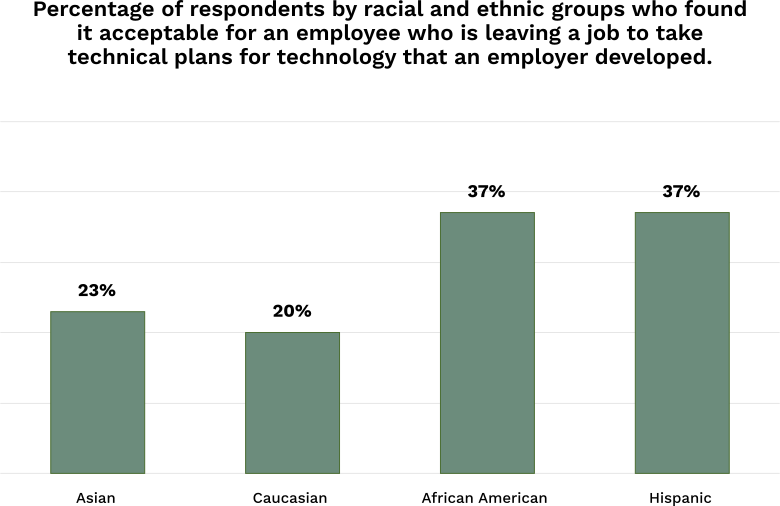
Further inquiry into different racial and ethnic groups showed that for certain conduct, Asians’ attitudes were more similar to Caucasians than African Americans or Hispanics. For example, while most respondents found it unacceptable for an employee to take technical plans for technology that a former employer developed, similar numbers of Asians and Caucasians found it acceptable (23% versus 20%). Similar numbers even found the conduct completely unacceptable (56% of Asians versus 61% of Caucasians). In contrast, African Americans and Hispanics tended to feel differently about this conduct than Caucasians and Asians. For example, significantly more African Americans and Hispanics believe this conduct is acceptable (37% for African Americans and 37% for Hispanics). Fewer African Americans and Hispanics also considered this conduct completely unacceptable (47% of African Americans and 39% of Hispanics). A similar pattern of findings was evident for attitudes about an employee giving a current employer documents containing technical plans that a former employer developed.
In contrast, income differences had a very limited impact on the attitudes in question. Although the effects were relatively small, the pattern of findings was the most intriguing. Overall, higher income respondents were more accepting of this conduct than lower income respondents. For example, higher income respondents were more likely to find it acceptable if an employee a) takes technical plans for technology their employer developed, b) provides their new employer with their former employer’s technical plans but relies on their memory in doing so, and c) shares with their new employer details about how a former employer solved a critical technical problem.
Venue Differences
Data show venue makes very little substantive difference in attitudes toward retaining and/or passing confidential or proprietary information, especially when compared to age and gender. For example, in each venue, most find it unacceptable for an employee to take technical plans for technology an employer developed, but most find it acceptable if the employee helped develop the technology. Most also disapprove of employees giving employers a former employer’s documents, but are largely split on whether it is acceptable to give that information if the employee relies on their memory rather than a document. Finally, a majority in each venue believe it is acceptable to share details with a new employer about how a former employer solved critical technical problems.
Interestingly, although the differences were small, when it came to retaining technical plans, regardless of who developed the technology, EDTX residents were the most accepting (33% accepting if the employer developed the technology versus 66% if it was the employee). Additionally, when it came to passing trade secrets, CDCA residents were the most accepting (34% for giving a document; 50% accepting for giving information from memory; 68% accepting if generally sharing details) followed closely by the EDTX residents (29% accepting if giving a document; 50% accepting for giving information from memory rather than a document; 68% accepting if share details). In contrast, WDTX and Delaware residents tended to find this conduct the least acceptable, relatively. For example, only 25% of WDTX residents and 26% of Delaware residents believed it was acceptable for an employee to give a current employer documents belonging to a prior employer. Although these patterns are notable, the differences were quite small and not conducive to drawing conclusions about which venue would be better or worse for trade secret cases.
Employment Status Differences
Aside from general demographic and venue differences, we also examined whether attitudes were different when it came to occupational background. First, we examined whether attitudes vary by employment status, i.e., employed fulltime, employed parttime, retired, unemployed, disabled, a student or stay-at-home parent. Data showed, consistent with our findings on age, retired individuals and students were more likely to have significantly different opinions than others.
Students were often among the most accepting of this conduct. Almost half of the students (42%) believed it was acceptable for employees to take technical plans for technology their former employer developed and 68% believed it was acceptable to do so if the employee helped develop the technology. Additionally, almost three quarters of students believed it was acceptable to give an employer information from a prior employer’s technical plans if they relied on their memory rather than a document (71%) and to share details about how a former employer solved a critical technical problem (74%).
Retired individuals, a vast majority of whom were over 65, were the least likely to find any of the conduct acceptable. For example, 92% of retired respondents (as compared to 74% overall) believed it was unacceptable for an employee to take technical plans for technology their former employer developed. Only 40%, as compared to 59% overall, believed it was acceptable to do so if the employee helped develop the technology in question.
In fact, in all but one circumstance, i.e., sharing details about how a former employer solved a critical technical problem, the vast majority of retired individuals believed the conduct was unacceptable. In two cases, substantial numbers of retired individuals viewed the conduct as completely unacceptable. Seventy-five percent believed it was completely unacceptable to take technical plans of technology their former employer developed and 72% believed it was completely unacceptable for an employee to give an employer a former employer’s documents.
Interestingly, attitudes of disabled respondents tended to be some of the least accepting, often second only to retired individuals. For example, 84% of disabled respondents believed it was unacceptable for an employee to take technical plans for technology their employer developed, with the vast majority (71%) believing it was completely unacceptable. When it came to relying on one’s memory rather than a document to pass a former employer’s technical plans, only 36% believed it was acceptable as compared to 33% of retired individuals. Similarly, only a slight majority of disabled individuals (55%), similar to 54% retired individuals, believed it was acceptable to share details about how a former employer solved a critical technical problem.
One additional finding of note involved stay-at-home parents. Interestingly, they were the most accepting of employees taking technical plans for technology they helped develop—even more so than students. Sixty-eight percent of students believed this was acceptable, compared to 70% of stay-at-home parents.
Management Differences
One would expect managers to be significantly less likely to find these behaviors acceptable, especially since managers often serve as the first line of defense in enforcing policies protecting an employer’s trade secrets. Along these lines, we examined the attitudes of those who had a job considered management and those who had the authority to hire, fire, or promote employees. For the most part, data show managers and those who had the authority to hire, fire, or promote employees were more likely to find this kind of conduct unacceptable. However, their views were not dramatically different from those who never had management positions or authority to hire, fire, or promote employees.
For example, eighty percent of those with the authority to hire or fire employees find it unacceptable for an employee to take plans for technology a prior employer developed while only 72 percent of those who never had that authority did so. Similarly, 63% of those who had the authority to hire or fire employees found such behavior completely unacceptable while only 53% of those who never had that authority did. Data show similar findings for attitudes toward taking technical plans employees helped develop and giving an employer documents containing technical plans for technology a prior employer developed.
High-Tech Workers
The question arises how high-tech workers themselves view this conduct. While none of the venues we studied are known hubs for high tech, we identified respondents who have jobs similar to those who work in the high-tech industry and are similarly skilled. This included respondents who work in computer science, IT, and engineering. We also identify those who have had jobs that involve working with an employer’s patented or proprietary technology.
It would be reasonable to conclude that individuals who have worked in these fields would think differently about such conduct, in part, because they are more familiar than others with the policies and rules surrounding intellectual property and technology. It would also be reasonable to assume individuals who have spent much of their careers in these fields would know that conduct at issue violates most, if not all, tech company policies.
However, data indicate that this is not the case. For the most part, engineers viewed this conduct no differently than anyone else. When they did, they were more accepting of this conduct. For example, engineers were more likely than others to believe it was acceptable to give an employer documents containing technical plans that their former employer developed (38% vs 28%). Moreover, nearly one-quarter of the engineers (24%) believed it was completely acceptable to do so. Computer science and IT personnel were also more accepting of this type of conduct, including employees a) taking technical plans for technology their employer developed, b) giving their employer documents that contain technical plans for technology their former employer developed, and c) sharing with their employer how a former employer developed technology but doing so relying on their memory rather than a document. These findings suggest that this type of conduct may be viewed as normal in the industry, at least among high-tech workers.
Other data in the survey lend credence to this explanation. We asked respondents whether they ever had a job working with an employer’s patented or proprietary technology. In the entire sample, fifteen percent (n=237) of respondents had worked with an employer’s patented or proprietary technology. How did they feel about this conduct? Results indicate they are more accepting than others of all of the conduct at issue, sometimes much more so. For example, twice as many found it acceptable to take technical plans for technology their former employer developed (48% versus 22%).
Similar numbers found it acceptable to give employers documents containing technical plans for technology a prior employer developed (48% versus 25%). Results showed less dramatic but sizable differences in attitudes about employees giving employers information about how a prior employer developed technology but relying on memory rather than a document (60% versus 44%) and sharing details about how a former employer solved critical technical problems (74% versus 60%).
Workers in Other Occupational Sectors
In the survey, we asked respondents to describe most of the jobs they have had. They were asked to choose from a list that included options such as accounting/auditing, airline/travel/hospitality, childcare/elder care, marketing/advertising/public relations, military/defense, etc. In essence, we asked respondents to identify the occupational sector in which they have mostly worked. However, the list also included some task-oriented options such as bookkeeping/billing and office/clerical. We then examined whether or not people who work in different sectors or types of jobs viewed the conduct in question differently.
Results show the respondents who were consistently the most accepting of this behavior were those who worked in banking or finance. Respondents who spent most of their careers in banking or finance were more accepting of all of the conduct at issue in this study. Notably, the size of these effects was also substantial. For example, twice as many respondents in banking or finance than those in other industries found it acceptable for an employee to take technical plans for technology their employer developed (49% versus 25%). And the numbers were nearly that large when it came to finding it acceptable for an employee to give an employer documents laying out technical plans for technology a former employer developed (47% versus 27%).
Other respondents who had consistently different views on this behavior were office and clerical workers. However, unlike those in banking or finance, office and clerical workers were more likely to find almost all of this conduct unacceptable. This includes both retaining and passing confidential or proprietary information. Moreover, at times, the difference between office and clerical workers and others was quite substantial. For example, 90% of office and clerical workers compared to 73% of others found it unacceptable to take technical plans for technology a prior employer developed. Seventy-eight percent of office and clerical workers, as compared to 54% of others, believed it was completely unacceptable. Additionally, 85% of office and clerical workers believed it was unacceptable for an employee to give an employer documents containing a prior employer’s technical plans, compared to 70% of others.
Other occupational sectors showed mixed results. For example, restaurant and food service workers were less likely than others to find it acceptable for an employee to take technical plans for technology a prior employer developed (19% versus 27%) but more likely than others to find it acceptable if the employee helped develop the technology (72% versus 56%).
Those Who Have Engaged in Similar Conduct
We also asked respondents if they had engaged in conduct similar to that at issue here. However, we focused our questions solely on retaining confidential or proprietary information to maximize the chances of honest responses. We even introduced justifications into the wording of questions to make any admissions more routine and justifiable. Specifically, we asked respondents if they had ever:
- Left a job and kept an employer’s documents or electronic files that your employer might consider to be confidential or proprietary information (n=78)
- Left a job and kept an employer’s documents or electronic files for professional development reasons, even though your employer would want them back or destroyed (n=67)
- Left a job and kept documents or electronic files that you created, even though the employer would want them back or destroyed (n=71)
Only about 15-17% of respondents who had a job that involved working with an employer’s confidential and proprietary information (n=449) admitted to retaining some of it after leaving a job. Not surprisingly, respondents who had retained an employer’s confidential or proprietary information after leaving a job were more likely than others to find such conduct acceptable. And these differences were quite substantial. For example, nearly three times as many respondents who kept confidential or proprietary information believed it was acceptable to take technical plans for technology an employer developed (67% versus 24%). Those who had kept confidential or proprietary information for professional development reasons were even more likely than others to find this conduct acceptable (84% versus 24%). Interestingly, those who had taken documents or files they created were less likely to believe it was acceptable to take technical plans for technology their employer developed. This disparity is likely a consequence of how these people justify their behavior by pointing to the fact it would be wrong to take something others had created.
These respondents were also more likely to find it acceptable for an employee to keep technical plans she/he created. Seventy-eight percent of those who had kept confidential or proprietary information believed it was acceptable. Eighty-one percent of those who kept confidential and proprietary information for professional development reasons believed it was acceptable. And 75% of those who kept documents or files they created believed it was acceptable for an employee to keep technical plans she/he helped create.
Importantly, respondents who had retained confidential or proprietary information were more likely to find it acceptable for tech employees to pass that information along to new employers. For example, 70% of respondents who had retained confidential or proprietary information found it acceptable for employees to give a new employer a former employer’s confidential and proprietary documents and 82% found it acceptable if the employee gave them that information while relying on their memory rather than a document. Data also showed that respondents who kept confidential or proprietary information for professional development reasons exhibited similar results. Seventy percent believed it was acceptable for employees to give a new employer a former employer’s confidential or proprietary documents and 82% found it acceptable if the employee passed along this information solely relying on their memory rather than a document. Each was also more likely to find it acceptable to share details with a new employer about how a prior employer developed technology (77% of those who retained information and 76% of those who retained information for professional development reasons)
Those who kept confidential or proprietary documents or files that they created were also more likely to find it acceptable for tech employees to give a new employer a prior employer’s information. For example, almost half believed it was appropriate to provide an employer with a former employer’s documents. And 73% believed it was acceptable to pass along confidential or proprietary information if an employee relied on their memory rather than documents. And a similar percentage believed it was acceptable for an employee to share details about how a former employer solved critical technical problems.
Key Takeaways & Recommendations
Identifying High Risk Jurors During Jury Selection
The findings of this study have implications both for litigators and tech company general counsel. Most obviously, for litigators, the results highlight characteristics of higher risk jurors for both plaintiffs and defendants.
-
- Men
- Those under 35 (especially those under 25)
- Students
- African Americans, Hispanics/Latinos
- Those employed in banking or finance
- Those employed in computer science or information technology
- Those who have retained materials from a former employer that the employer wolid have considered confidential and proprietary
Each grouping showed to be significantly more likely to find behavior associated with trade secret theft to be acceptable.
-
- Women
- Those over age 55 (especially 65 or older)
- Retired individuals
- Asians, Caucasians
- Disabled individuals
- Office and clerical workers
Each grouping showed to be significantly more likely to find this conduct unacceptable. Undoubtedly, the facts of any particular case, especially the contracts involved, can weigh heavily on any juror profile and the determination of good and bad jurors. But, independent of case specific jury research, these findings help shed light on jurors who carry greater risks at trial.
Prospective Juror Characteristics and Life Experiences Rather Than Venue Will Have a Greater Impact on Outcome
The study also demonstrates that characteristics of prospective jurors and the jury pool likely has a bigger effect on these risks than venue. While attitudes toward behavior associated with trade secret theft varied somewhat according to venue, those differences were dwarfed by the effect of individual characteristics and life experiences. This should be no surprise. In contrast to patent litigation where most prospective jurors have little to no experience with the issues at hand, many come into trade secret cases with a plethora of relevant attitudes and experiences that shape their thinking about employees, work product and changing jobs. This increases the likelihood that individuals without experience in the high-tech industry will identify with employees and see themselves in the predicament of high-tech workers accused of trade secret theft—and as the findings demonstrate, this is not specific to any particular venue or region of the country. Focusing on these characteristics and life experiences of prospective jurors during jury research and selection will have the greatest impact on success at trial, regardless of the venue.
Navigating Prevalent Beliefs to Develop Persuasive Case Themes
The findings also have implications for how litigators develop case themes in trade secret cases. Developing a persuasive case theme often requires effectively navigating or connecting with widely-held beliefs. This research highlights two such beliefs that could inform thematic development. Specifically, these include:
- Employees have at least some rights of ownership for their work product
- Employees have the right to put the knowledge and experience they gain in one job to use in their next job
Not surprisingly, the latter belief was particularly prevalent among computer and IT professionals. Confronting these beliefs head on in thematic development when developing a case for trial will be essential, especially for plaintiffs trying to protect their intellectual property. In many cases, litigators can effectively navigate these beliefs by emphasizing language in signed employment agreements and argue that the employee knowingly and explicitly gave up those rights by signing. Absent clear-cut contract language, navigating these beliefs will prove more difficult.
The Challenges of Protecting Intellectual Property in the High-Tech Landscape
These beliefs also underscore challenges for general counsel and tech companies in creating policies to protect their intellectual policy. Devising an effective policy becomes difficult in light of beliefs that people have at least some rights to their work product and, perhaps even more challenging, have the right to put their knowledge and experience gained in a job to use in another job. From an employee’s perspective, that knowledge and experience is what got them hired in the first place. Sharing what they learned at their former job becomes part of the bargain. Companies should be wary of how they treat others trade secrets. New employees are not likely to take your policies as seriously if you encourage them to provide information about how their prior employers overcame technological hurdles. In this light, the findings for age as well as engineering, computer science and information technology professionals take on a special significance. Overall, these findings emphasize the importance of clearly identifying what is and is not a trade secret, educating employees about what is and what is not acceptable (especially among younger employees), and implementing reasonable security measures. Navigating widely held beliefs about ownership of work product and professional knowledge and development will be key components in developing a more effective policy about intellectual property.
The DOAR Research Center will continue to examine this and other data to provide insight into the intellectual property issues faced by litigators, general counsel and tech executives alike.
[1]As is common in market research databases, Hispanics were underrepresented in each venue. Additionally, the CDCA sample included more degreed respondents than are present in the venue, i.e., roughly 41% versus 31%). Also, the EDTX sample included significantly more women than men, roughly 68% of the 107 respondents were women. Given the paucity of empirical research conducted in the Marshall Division after Judge Gilstrap issued his standing order, we decided to obtain the largest sample size possible. Each of these issues was factored into the analysis, the interpretation of results and conclusions.
[2]Only statistically significant (p<.05) are included in the report.

The DOAR Research Center found that jurors’ occupations strongly influence how they view technology companies and intellectual property disputes.

Following the 2024 presidential election, the DOAR Research Center conducted a national survey revealing a shift in how jurors view white-collar cases.
In a changing patent litigation landscape, the DOAR Research Center studied how jurors view high-tech companies across key venues.

The DOAR Research Center examined how jurors respond to free speech arguments amid growing polarization and debate over the First Amendment.

Amid growing concern over drug pricing and the opioid crisis, the DOAR Research Center studied public attitudes toward pharmaceutical companies.
The DOAR Research Center examined how jurors approach workplace harassment and discrimination claims in the post-#MeToo era.