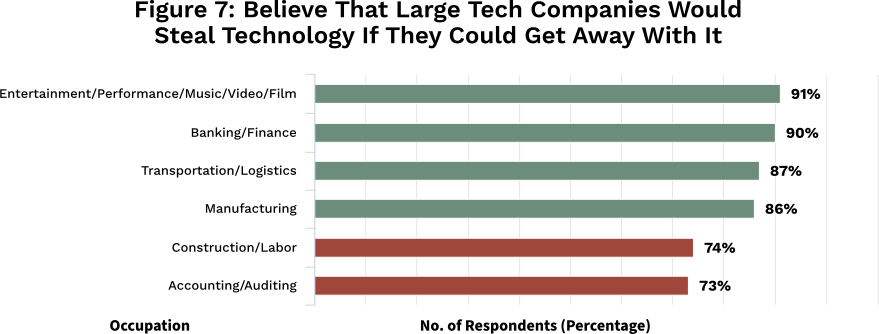
In contrast, those who mainly worked in entertainment, banking/finance, manufacturing, and transportation/logistics were significantly more likely than others to believe that large American technology companies would steal or illegally copy technology if they thought they could get away with it. Agreement among such a diverse mix of occupations is notable, even in light of the fact that more than three-quarters of respondents believed large tech companies would steal technology if they could get away with it.
Somewhat different findings emerged when we asked respondents whether large American technology companies were more likely to steal or illegally copy technology from an individual entrepreneur or small company, rather than from another large American technology company (see Figure 8). Interestingly, only those who mainly worked in education believed they would. Those who worked mostly in accounting/auditing, bookkeeping/billing, computer science/IT, charity/nonprofits, and the military were less likely to believe that a large technology company would be more likely to steal or illegally copy technology invented by a small business or individual entrepreneur.
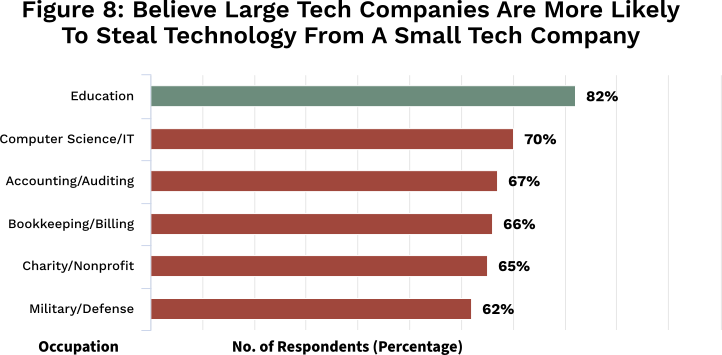
These findings bear discussion because of their implications for whether potential jurors will be receptive to ‘David vs. Goliath’ themes. Individual entrepreneurs or small businesses who sue large tech companies for patent infringement often try to develop a David versus Goliath or underdog theme when arguing their case to the jury. These findings provide insight into which types of jurors will be most and least receptive to this theme. All else being equal, these findings suggest that teachers, school administrators, and the like will be most receptive to this theme. In contrast, these findings suggest accountants, bookkeepers, IT professionals, and military personnel will be the least receptive. Most surprising among these findings is that respondents who have mostly worked at charities or nonprofits would not appear to be receptive to this theme. One would think that in the US, people who work at charities would favor the underdog and would be receptive to the theme of David vs. Goliath, especially since most dedicate themselves to helping those in need.
The disconnect likely arises from the fact that patent infringement involves two private companies. For people who make careers out of helping the disadvantaged, private companies are not victims. Even struggling or failed enterprises are not victims. Those with careers in charities and nonprofits work with REAL victims. They are well acquainted with real victims. Failed capitalists and failed inventors are not real victims. As consultants, we see a similar view being expressed when wealthy plaintiffs sue and attempt to portray themselves as victims. It can often create a backlash. People who have been real victims or work with real victims sometimes find rich plaintiffs lacking in credibility, especially those who lean hard into casting themselves as victims.
America First & Blue-Collar Attitudes Toward Foreign Companies
Looking at someone’s occupation to gain insight into how they feel about foreign tech companies may seem like a tall order. However, with the rise of the MAGA movement, occupation is sometimes viewed as a meaningful indicator of someone’s perspective toward foreign tech companies. Adopting a protectionist agenda, working-class MAGA members often view foreign companies less favorably than their American counterparts.
As a result, some litigators representing foreign companies in lawsuits against American companies tend to believe that prospective jurors who hold blue-collar jobs may be more likely to favor the American company. This often leads litigators to exercise one of their few peremptory challenges to remove them from the panel.
We examined whether blue-collar workers are, in fact, more antagonistic toward foreign companies. We did this in two ways. First, we examined whether they were more likely to be suspicious of foreign tech companies. Second, we examined whether they are more likely to believe that the court system should protect the interests of American tech companies rather than those of foreign tech companies. The working-class occupations included in this analysis are agriculture/food production, construction/labor, manufacturing, and transportation/logistics.
To gauge respondents’ suspicions, we first asked them whether they believed foreign tech companies doing business in the US were more likely than American tech companies to disregard US laws. Results showed that only respondents who worked in construction/labor were more likely to hold this belief (78% vs. 71%). Other blue-collar, working-class respondents were not any more or less likely than others to hold this belief.
We then asked respondents who they thought was more likely to steal or illegally copy technology: American tech companies or foreign tech companies. Results showed that working-class respondents, i.e., those who work in construction, agriculture or manufacturing, and transportation, were NOT more likely to believe that foreign companies had a higher proclivity to steal or illegally copy technology.
Finally, we asked respondents whether they believed the US legal system should protect the interests of American technology companies over those of foreign technology companies doing business in the US. Again, one might expect that those who work in construction, agriculture, and manufacturing would be more likely to advocate this belief. However, the data did not bear this out. In fact, data shows that agricultural and food production workers (70% vs. 83%) were significantly LESS likely than others to hold this America First belief.
To investigate further, we examined whether the political affiliation of blue-collar workers mattered. In other words, do blue-collar Republicans think differently about these issues than blue-collar Democrats? Results showed that they did not. Republican blue-collar workers were no more or less likely than Democratic blue-collar workers to be suspicious of foreign companies or believe that courts should protect the interests of American tech companies over those of foreign tech companies doing business in the US. We also compared blue-collar Republicans to all other respondents and found that their views on foreign tech companies did not significantly differ from those of anyone else.
While it may be that MAGA’s focus on ‘America First’ does not extend to the tech sector, the data suggest that these kinds of ‘America First’ beliefs are much more widespread than many would expect. For example, the vast majority of respondents (83%) believe that courts should protect the interests of American tech companies over those of foreign tech companies. This suggests that foreign tech companies may find litigating cases against American tech companies particularly challenging, regardless of whether they are in a red or blue venue (see also “Juror Attitudes Toward High Tech Companies in Patent Litigation,” DOAR Research Center, 2025).
Key Takeaways
Occupation is an important consideration when evaluating the risks posed by prospective jurors in IP cases. Moreover, these data show that they can give insight not only into their technological sophistication or interest, but also into their attitudes about large technology companies and the theft of technology. Time and time again, what respondents do for a living significantly affected their views on these subjects. Prior research conducted by the DOAR Research Center indicates that age has the greatest impact on attitudes toward technology, technology companies, and patent infringement. Simply put, young people think much differently about these issues than older people do. Nevertheless, the effects of occupation remain significant, and in some cases rival the impact of education, income, racial/ethnic affiliation, and venue.
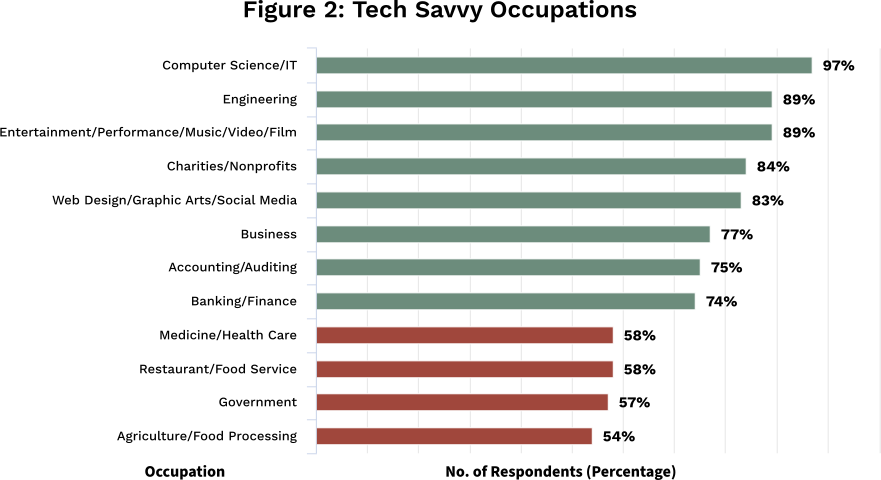
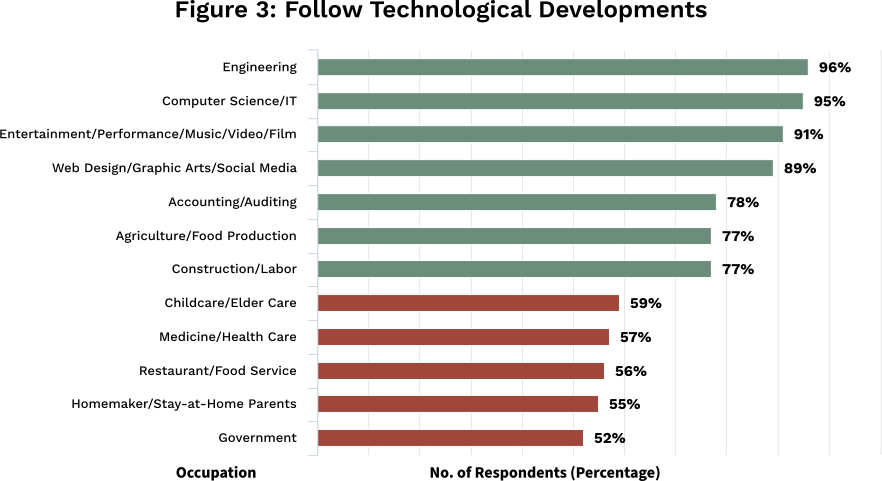
What lessons can be learned from this research? First, consider computer science and IT professionals. These individuals have always received special attention from litigators because, on average, they are the most technologically sophisticated, most likely to understand the technology behind high-tech patents, and most likely to be able to teach that technology in the jury room. The data here are consistent with these hypotheses. Computer science and IT professionals were the most likely to consider themselves technologically savvy and the most likely to follow the newest developments in technology.
However, this data shows that the technological sophistication these professionals bring to bear does not equally benefit all parties in patent litigation. Computer science and IT professionals are more likely than others to have positive opinions of Big Tech, more likely to believe large technology companies are ethical, and less likely to think large technology companies steal technology from individual entrepreneurs or small tech companies. However, the favorable opinions of large technology companies are not without their limits. Despite these favorable opinions, computer science and IT professionals are more likely than others to believe that American tech companies have a higher proclivity for stealing or illegally copying technology than foreign tech companies. Overall, these data suggest that computer science and IT professionals will be better jurors for large technology companies rather than small ones, and some, may be better for foreign tech companies, as opposed to American ones.
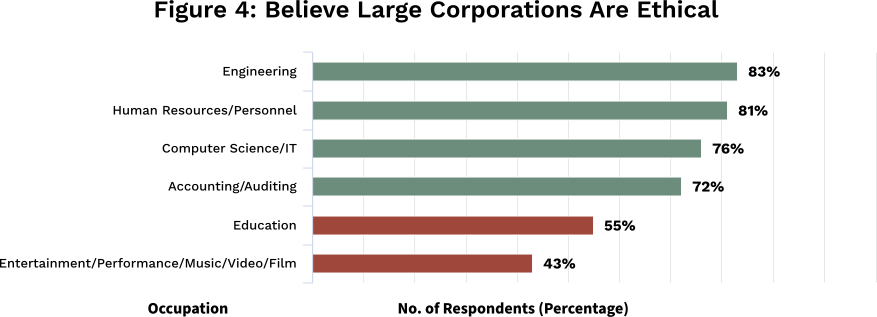
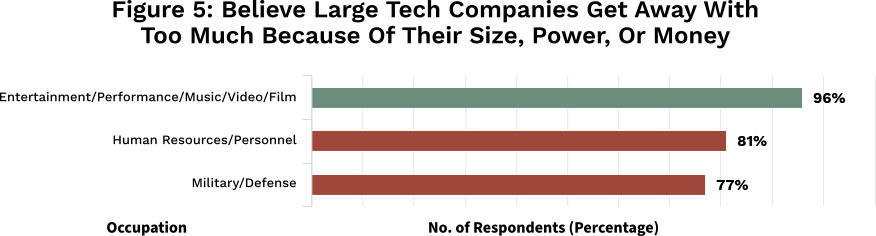
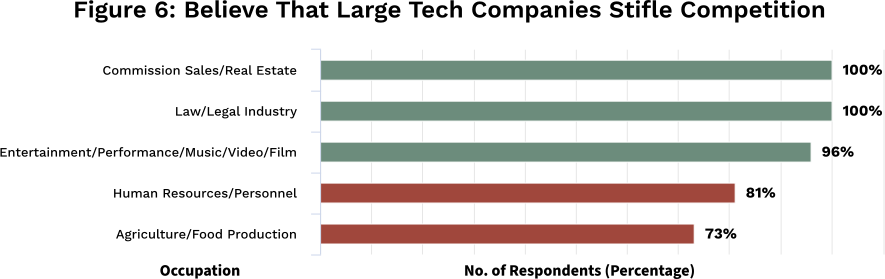
Interestingly, human resources professionals also showed themselves to be more favorable to Big Tech than others. HR professionals are more likely to a) have a positive opinion of Big Tech, b) believe Big Tech is ethical, c) believe large technology companies do NOT stifle competition, and d) believe large technology companies do NOT get away with too much because of their size, power, and money. These attitudes likely have little to do with technology per se than general pro-corporate attitudes shared among HR professionals—attitudes well known among lawyers who litigate employment disputes.
Accountants and auditors tended to be more favorable to Big Tech than others. Accountants/Auditors are more likely to a) believe large technology companies are ethical, b) believe large technology companies will not steal or illegally copy technology if they can get away with it, c) believe large technology companies do NOT stifle competition, and d) believe large technology companies will NOT steal or illegally copy technology from an individual entrepreneur or small tech company.
Other respondents who displayed at least some favorability towards Big Tech on specific issues included: engineers, military/defense professionals, construction workers, agriculture/food production workers, those in bookkeeping/billing, and those who work for charities and nonprofits. Notably, among this group, only agricultural/food production workers are significantly less likely than others to consider themselves tech savvy.
Those who held the most unfavorable attitudes toward Big Tech, worked in the entertainment industry. These are performers or they work in the video or film industries. They are more likely than others to a) believe large technology companies are NOT ethical, b) think Big Tech stifles competition, c) believe large technology companies get away with too much because of their size, power, and money, and d) believe large technology companies will steal or illegally copy technology if they can get away with it. Not surprisingly, many of these respondents lived in the Central District of California. Therefore, they are a notable risk for lawyers representing large technology companies in Southern California.